

وبلاگ
The Use of Vinegar in Pickles

The Secret Behind Delicious Pickles: The Magical Role of Vinegar
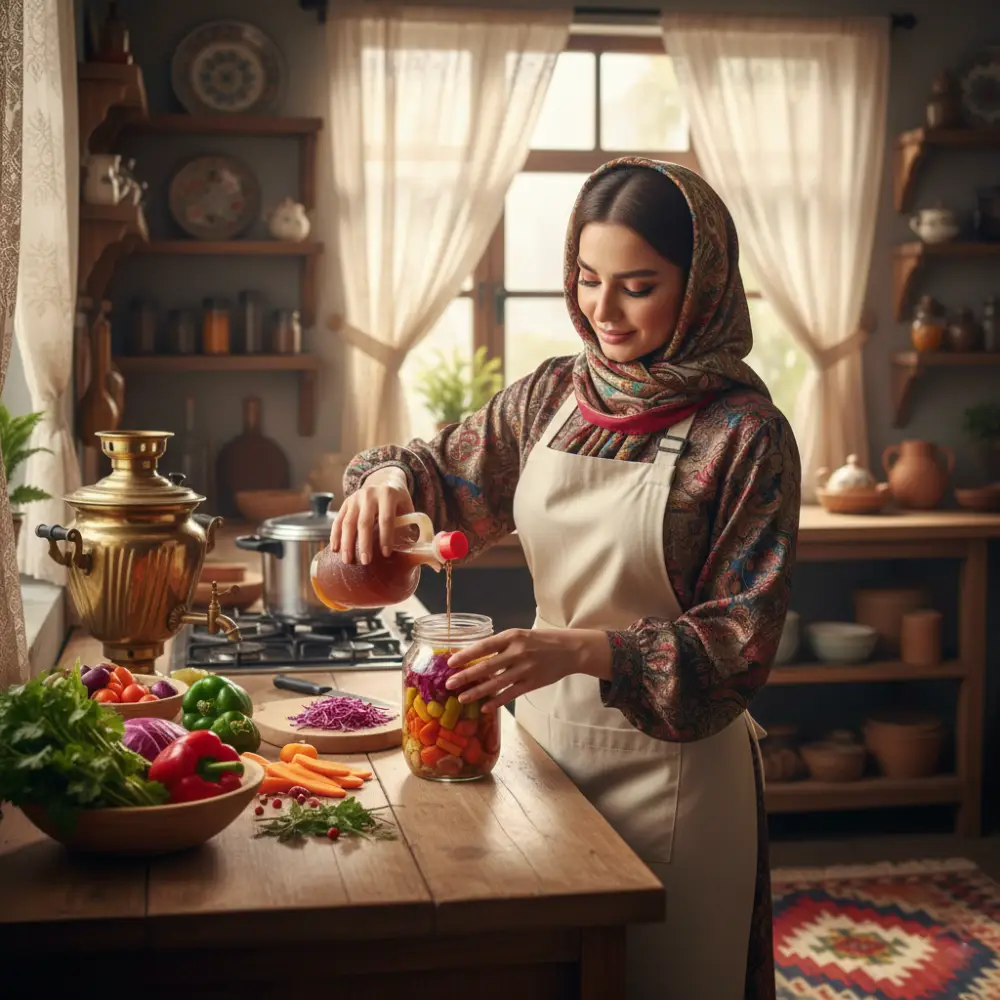
Pickles are among the most popular traditional Iranian foods and are served both as appetizers and as accompaniments to main dishes. Vinegar is the main ingredient in most pickles and plays an important role in their flavor, shelf life, and safety.
In this article, you will learn about the culinary uses of vinegar in pickling, as well as essential tips for preparing homemade pickles.
Vinegar: The Magical Seasoning in Pickles
Vinegar is a natural product made by fermenting fruits, such as apples and grapes, or grains. The acetic acid in vinegar gives pickles their sour flavor while helping to prevent spoilage and microbial growth.
Benefits of Using Vinegar in Pickles
Extended Shelf Life
Acetic acid acts as a natural preservative and helps keep pickles fresh and safe for several months.
The Main Flavoring Ingredient
Vinegar provides the pleasant sour flavor that forms the foundation of pickles and helps balance the taste of fruits and vegetables.
Preserving Color and Texture
When used correctly, vinegar helps vegetables retain their bright color and crisp texture.
Nutritional Properties
Natural vinegar contains antioxidants, vitamins, and enzymes that may support digestion.
Types of Vinegar Suitable for Pickling
1. Apple Cider Vinegar
- Mild and natural flavor
- Suitable for fruit pickles and fresh vegetable pickles
- Offers more nutritional benefits than white vinegar
2. Grape Vinegar
- Pleasant aroma and attractive color
- Suitable for traditional and mixed pickles
- Helps preserve the color of vegetables
3. White Vinegar
- Strong flavor and clear appearance
- Suitable for industrial and homemade pickles intended for long-term storage
- Strong antibacterial properties, but contains fewer vitamins and antioxidants
Uses of Vinegar in Different Types of Pickles
Vegetable Pickles
Examples include cucumbers, cauliflower, carrots, and eggplants.
Vinegar helps vegetables remain crisp, colorful, and flavorful.
Fruit Pickles
Examples include plums, apples, peaches, and barberries.
Vinegar helps preserve the texture of the fruit and creates a mild, pleasantly sour flavor.
Local and Mixed Pickles
Examples include Liteh pickles, mixed vegetable pickles, garlic pickles, and pepper pickles.
Vinegar is the main ingredient responsible for balancing the flavor of these pickles and helping prevent mold growth.
Essential Tips for Using Vinegar in Pickles
-
Choose Natural Vinegar
Apple cider vinegar and grape vinegar are excellent options for achieving a pleasant flavor and greater nutritional value.
Use the Correct Proportion
Generally, 250 to 300 milliliters of vinegar is sufficient for every one liter of pickles.
Maintain the Right Temperature
When preparing pickles with a hot vinegar solution, allow the vinegar to cool slightly to prevent the fruits or vegetables from becoming soft or mushy.
Use Clean Jars and Containers
Using sterilized jars helps prevent mold growth and increases the shelf life of the pickles.
Combine Vinegar with Spices and Aromatic Herbs
Combining vinegar with garlic, peppers, dill, and bay leaves significantly enhances the flavor and aroma of pickles.